When I walked through the time tunnel and stood in the Roman Square in the first century AD, the golden rule echoed in my ears: “One person commits a crime, and everyone is punished.” I originally thought it was just a historical expedition. It was not until I saw the first resident being turned into a golden statue for violating the precepts that I realized that I had stepped into a moral trial spanning a thousand years.
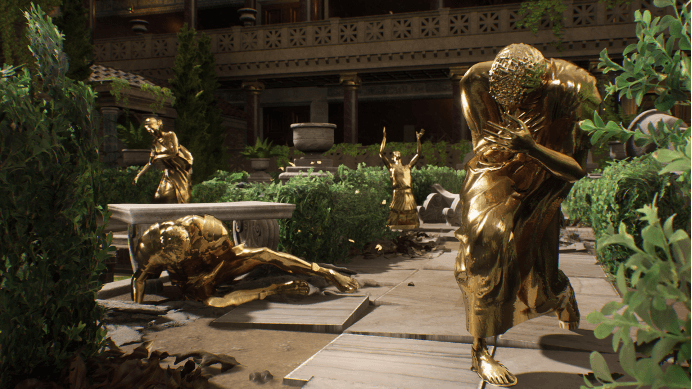
The game opens at the modern archaeological site. I found a mysterious badge in the ruins, which was accidentally transported to the ancient Roman city-state. More than 20 living people live here: abused slaves, corrupt tax officials, idealist philosophers, and the mysterious prophet who made the golden rule. My task is very simple: to find out the sinners who are about to break the precepts and prevent the end of the world from coming.
The first test came unexpectedly. In the market, I witnessed the nobleman Claudius beating slaves. If I interfere, it may violate the precept of “harming others”, and if I stand by and watch, it will be against my conscience. In the end, I chose to trick the guards away and secretly send medicine to the slaves. This small good deed triggered an unexpected chain reaction in the subsequent plot.
The most difficult choice happened on the third day. The philosopher Duli confessed to me that he was writing a forbidden book to expose the darkness of the rule. If I report him, I can get a rich reward; if I help him, I may let the whole city bury him. After repeated thinking, I chose to cooperate with him and sneak into the temple at midnight to tamper with the prophecy — this decision made the whole story a new branch.
As the investigation deepened, I found that every resident had a secret. The priestess told white lies to protect the believers, the veteran stole medicinal materials to treat his daughter’s illness, and even the prophet himself carried the unspeakable past. Under the law of “absolute justice”, everyone may be a sinner. Once, in order to obtain key information, I had to acquiesced to the smuggling of businessmen. That kind of moral compromise made me unable to sleep all night.
The most exquisite design of the game lies in its multiple solutions. In the face of the same dilemma, I can choose to inform, deceive, negotiate or violence. Once, in order to prevent the murder, I stole the murder weapon in advance, but accidentally triggered the “theft”. The moment I became a golden statue, I suddenly realized that in this city, even goodwill may become the original sin.
After seven time cycles, I finally uncovered the truth: the golden rule is the protective cover set by the prophet to stop the massacre. But the most ironic thing is that when I put all the evidence in front of the residents, they choose to maintain the status quo — people are more willing to live in the shackles of safety than freedom full of uncertainty.
On the weekend after customs clearance, I went to visit the ruins of Rome. Looking at those broken marble columns, I suddenly felt that history was never far away. Every era has its “golden rule”, and everyone chooses between freedom and security. If you also want to examine modern morality in ancient puzzles, _The Forgotten City_ will give you the deepest thoughts. After all, the real dilemma is never the difference between good and evil, but the choice between countless “right”.